
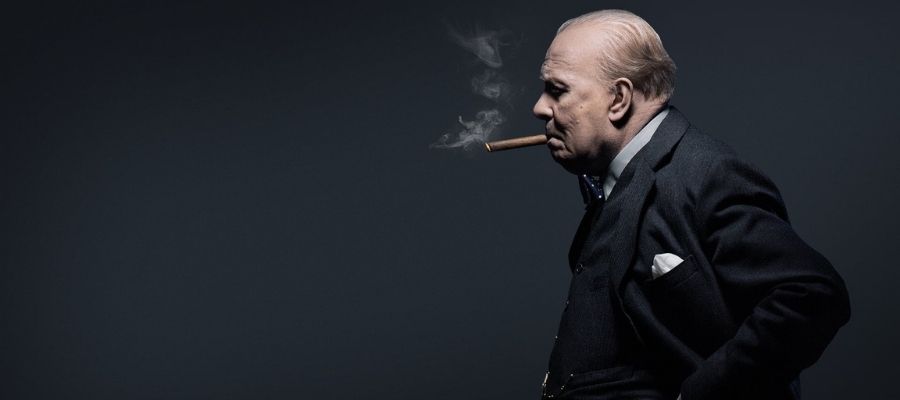
In anticipation of World War II, with the rise of Nazi Germany, the British Parliament recognized that the country required a solid person, capable of uniting Britain’s national forces and forming a European alliance against Hitler’s invasion. The person considered by the parliamentary body was the highly respected, powerful and incorruptible Winston Churchill. The man who set the course, policies and strategies for the UK, his nation, in the early days of World War II, when Hitler’s war machine seemed unstoppable and the Nazi invasion of Britain was imminent. He faced Hitler with his most powerful weapons- Effective Interaction and Communication.
Churchill’s Communication Skills
In our first encounter with Churchill in the movie, we discover that his main priority is communication, which he initiates before getting out of bed. The opening sequence shows two noteworthy communication skills of Churchill, which he uses many times throughout the film.
His 1st skill is Networking, which means maintenance and application of his network. Throughout the film, we come to understand that Churchill relies and depends heavily on his communications network which is also the solution to many problems. He obtains up-to-date information and analysis from this network and in a moment, with the help of an old collaborator who is still in close contact with him, mobilizes a fleet of ships to help the British army.
His 2nd skill is use of a suitable method of communication. There are advantages and disadvantages to communicating via email, correspondence, phone calls, face-to-face meetings or instant messaging. Pay special attention to Churchill’s method and manner of communication in the film. When choosing the method of communication, the time of the communication must be taken into account. You must know what information you intend to share and which channel of communication will convey this message to the other party/parties more effectively?
It does not matter if the communication is a telegram, a call or a face-to-face session. Churchill is the master communicator and articulator, conveying the massage with complete clarity. He knows how to express complex issues in a coherent and simple way. He dispels ambiguities by removing irrelevant content and including examples and evidence that helps the audience fully understand the issue.
This act of structurization of expression stems from Churchill’s writing skills ability, and as he is constantly putting pen to paper. To present an effective speech in parliament, he spends hours creating a structured and concise text. If correspondence is to be sent to someone, he becomes increasingly sensitive to correct spelling and punctuation, because he believes a letter portrays his character and personality when not present in the flesh.
Now imagine, how a person who believes correct presentation of words depicts his character, prepares for face-to-face communication, where a one’s behavior is exposed to the audience. Many nonverbal massages and signals are exchanged through choice of clothing, body language, facial expressions and eye contact. Churchill knows these tools well and uses them to interact with his audience.
A unique example of this interaction is in a memorable sequence when Churchill takes the London Underground to talk to ordinary people and creates a sense of engagement and interaction in the audience.
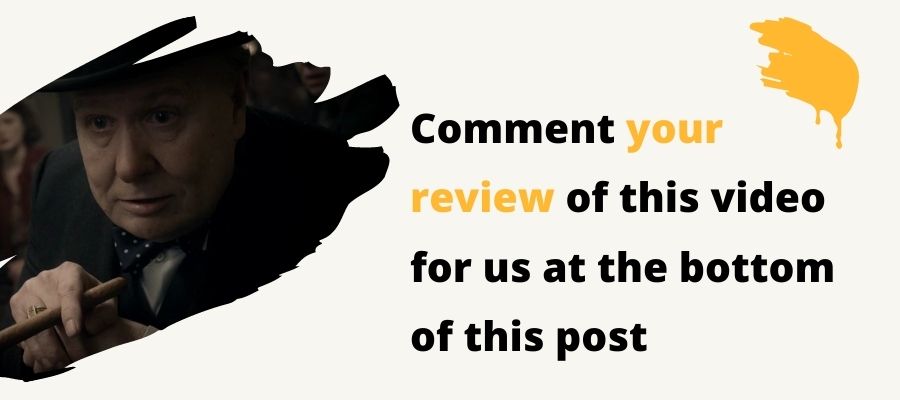
There are two very important points in Churchill’s approach to people that allows managers to communicate more effectively:
1. Showing respect and empathy that can moderate and control the other party’s emotions and concerns.
2. Effective listening which helps the conversation take the right path and reach the expected goals.
How to strengthen our communication skills?
1. Observe and study the behavior and personality of successful communicators.
2. Ask a close friend or colleague for constructive criticism of yourself.
3. Practice improving your communication habits.
4. Attend communication skills workshops or classes.
5. Take advantage of communication opportunities.